Make a tax deductible donation to bogong moth conservation today.
Click here for the Bogong Watch tagging program
〰️
Click here for the Bogong Watch tagging program 〰️
WELCOME TO BOGONG WATCH

An initiative of Invertebrates Australia
OUR MISSION IS TO
conserve the bogong moth migration
We acknowledge that Australia’s land, sky, and sea Country always was and always will be Aboriginal land.
What is Bogong WATCH?
Bogong Watch is a program driven by a growing network of observers across Australia gathering and reporting sightings of Bogong moths to help map its epic migration.
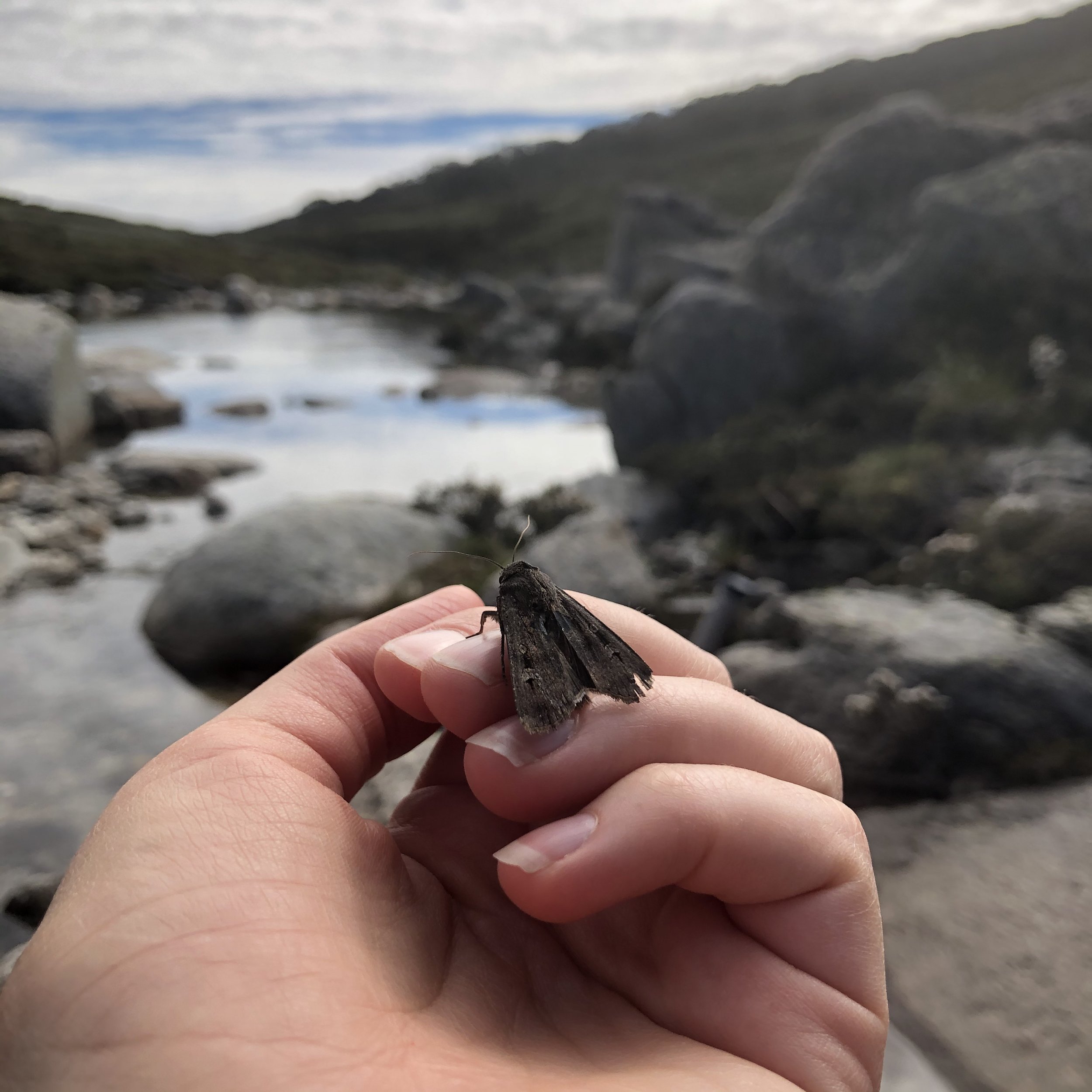
HOW CAN I TELL IF I HAVE FOUND A BOGONG MOTH?
WHY IS THIS IMPORTANT?
Bogong moths are important to First Nations peoples across Australia and in particular in the Australian Alps.
Bogong moths are important flower-visitors along their migratory paths and in the Alps
Bogong moths provide critical nutrients in the Australian Alps to various predators, parasites and parasitoids
Bogong moth populations have declined and crashed in recent years and happily have started to recover in numbers.
Bogong moths are endangered because the over-summering habitats (aestivation sites) they need are declining in quality because they are increasing in temperature. Bogong moths are no longer using some of their most northerly sites for the whole summer.
Bogong moths are listed as Endangered on the IUCN Red List of Species
WHO IS on THE PROJECT TEAM?
This project is backed by a wide network of people across Australia and overseas. The team at Western Sydney University that is driving Bogong Watch is lead by A/Prof Kate Umbers and includes Dr Eleanor Drinkwater (Postdoc and Invertebrates Australia Project Lead), Sebastian Judkins (PhD student) and Connor Marsland (PhD Student), Ayesha Kelly (M.Phil. student), Linnea Vilhelmsson Emneby (Bogong watch project manager) with our collaborators, Prof Eric Warrant (Lund University), Dr Marissa Parrott (Zoos Victoria), Prof Ken Green (ANU), Dr Peter Caley (Data61), Dr Megan Reich (University of Ottawa), and Clare Dittemore (University of Nevada, Reno). There are many First Nations groups conducting studies on Bogong Moths and there are further teams working on different aspects of the Bogong migration at Lund University, University of Melbourne, CSIRO Data61, CESAR Australia, and more.
who can be part of Bogong Watch AND WHAT WILL HELP?
Everyone can join in by:
looking out for tagged Bogong moths (after feb 2027)
contributing photos of Bogong moths to Bogong Watch on iNaturalist or Zoos Victoria’s MothTracker and
telling us about their memories of Bogong moths.
We need everyone to help!
WHERE CAN BOGONG MOTHS BE OBSERVED?
Even though most Bogongs spend the summer in just the highest parts of Australia’s South Eastern mountains, Bogong moths breed in and fly over vast areas of Australia every year including Boorloo / Perth, Adelaide, Naarm / Melbourne, Lutruwita / Tassie, southern Queensland, and basically all of New South Wales!
WHAT TIME OF YEAR Are bogong moths about?
Outside of the high country, everyone should be looking out for Bogong moths all Spring, Summer and Autumn.
In the high country moths can be about from mid-spring to mid-autumn.
Bogong moths are larvae (caterpillars) through winter and become adults (moths) around mid August. Once the weather gets too hot for them they’ll head off to the alps, probably around early to mid September in most regions in Australia’s south east. Moths will continue to fly in to the alps until mid summer and move among over-summering (aestivation) sites throughout the summer. It’s not clear when moths start leaving the Alps to return to the low country to breed, but it seems like some leave in early Autumn and continue to leave slowly over time until winter.
HOW WILL MAPPING THEIR MIGRATION HELP The MOTH?
The project ultimately aims to direct conservation actions for the Bogong moth, an endangered species (IUCN Red List 2021) of profound cultural, ecological, and economic importance to Australians. Although iconic and famous for their epic migration to the Australian Alps, the Bogong moth's distribution and flyways are unknown making conservation actions impossible. This project expects to forge the key partnerships and harness public enthusiasm to generate the data needed for conservation actions. The expected outcomes of this project are enhanced capacity to identify and mitigate threats to Bogong moths. This should provide significant benefits such as a highly transferable model for continent-wide conservation in Australia.
CONTACT US!

Art by Gail Neuss (C) All Rights Reserved